The search for a calling was never really about work. It’s about something larger than you.
How meaning migrated, from God, to the self, to work. The theology fell away, but the work ethic didn't.
In my last essay, I introduced three different relationships a person can have with work:
Work as a job
Work as a career
Work as a calling
The people I work with often arrive with a career orientation that has slowly started to shift. They usually have the experience, the title and the salary to go on living a very comfortable life, but something about that doesn’t satisfy. What they want is to do work that is meaningful and contributes to making the world a better place. They want to wake up feeling excited to start their day because they know their work matters. What they describe is much closer to a calling than a career, but none of them have ever used that word.
When I assessed my own relationship with work, the concept of a calling resonated, but I also hesitated because the word calling is an awfully religious term for someone with no religious affiliation. To have a calling implies that something outside of you is doing the calling.
What if you don’t arrange your life around a God? Where do you turn to find your calling?
The existential vacuum
I’ve been thinking about the grief that follows when a person leaves work, whether that be someone walking away from a career of ten or more years, a founder who sells their company for a life-changing amount of money, or someone who’s about to step into retirement they spent fifty years working towards.
Viktor Frankl called it the existential vacuum. He described it as a feeling of meaninglessness, an inner emptiness. What’s left is a person without instruction. It first shows up as boredom and the strange sense that nothing much matters anymore, not quite depression, though it can turn into that. Frankl predicted that progressive automation would lead to an increase in leisure time that most people won’t know what to do with.
It doesn’t happen to everyone, but experiencing grief, depression and a sense of listlessness aren’t uncommon in these transitions, and it starts to make sense when you look at what work is actually supplying.
Work is the primary means by which we earn an income. You likely spend more time working than you do with your family, your friends or anything you’d call leisure. What we don’t really notice are all the other things it supplies us along the way, like challenge, structure, community, something to work towards and the sense of being needed. They sound like minor conveniences of the job, but they’re actually much more important to our sense of meaning than we think. None of it is written into your contract, so it usually stays invisible until the day work stops.
Psychologists tend to break meaning down into three parts: purpose, coherence and significance. Purpose is a sense that your life is aimed at something, coherence is having a life that makes sense to you, and significance is mattering to other people. Almost everything work supplies feeds into one of the three parts of meaning.
The researchers who studied work as a job, career and calling, were careful to say there’s no hierarchy between them. A person who has a job orientation isn’t necessarily worse off, because they tend to locate meaning elsewhere in their lives, which is a perfectly coherent way to live. For the rest of us, work is one of the places our sense of meaning comes from.
This brings me back to work as a calling. This concept arrived from somewhere and it brought its history with it, whether we know it or not.
Work as punishment before it was a purpose
If you look at one of oldest texts around, you’ll find that the Old Testament frames labour as a positive calling that was later corrupted into painful toil. After humanity’s original sin, the ground gets cursed and labour is characterised by sweat, hardship and frustration.
Through the Middle Ages, the medieval church popularised a view which divided society into three orders:
Those who worked (laboratores): the peasants and craftsmen
Those who fought (bellatores): the nobility and knights
Those who prayed (oratores): the clergy and monks
Within this hierarchy, the work of the clergy and monks was understood as holy and spiritually higher, while work like farming, trading, and cleaning was understood as spiritually lower. A divine calling was strictly limited to priests and monks who had been summoned by God into religious life, while everyone else held an occupation to survive.
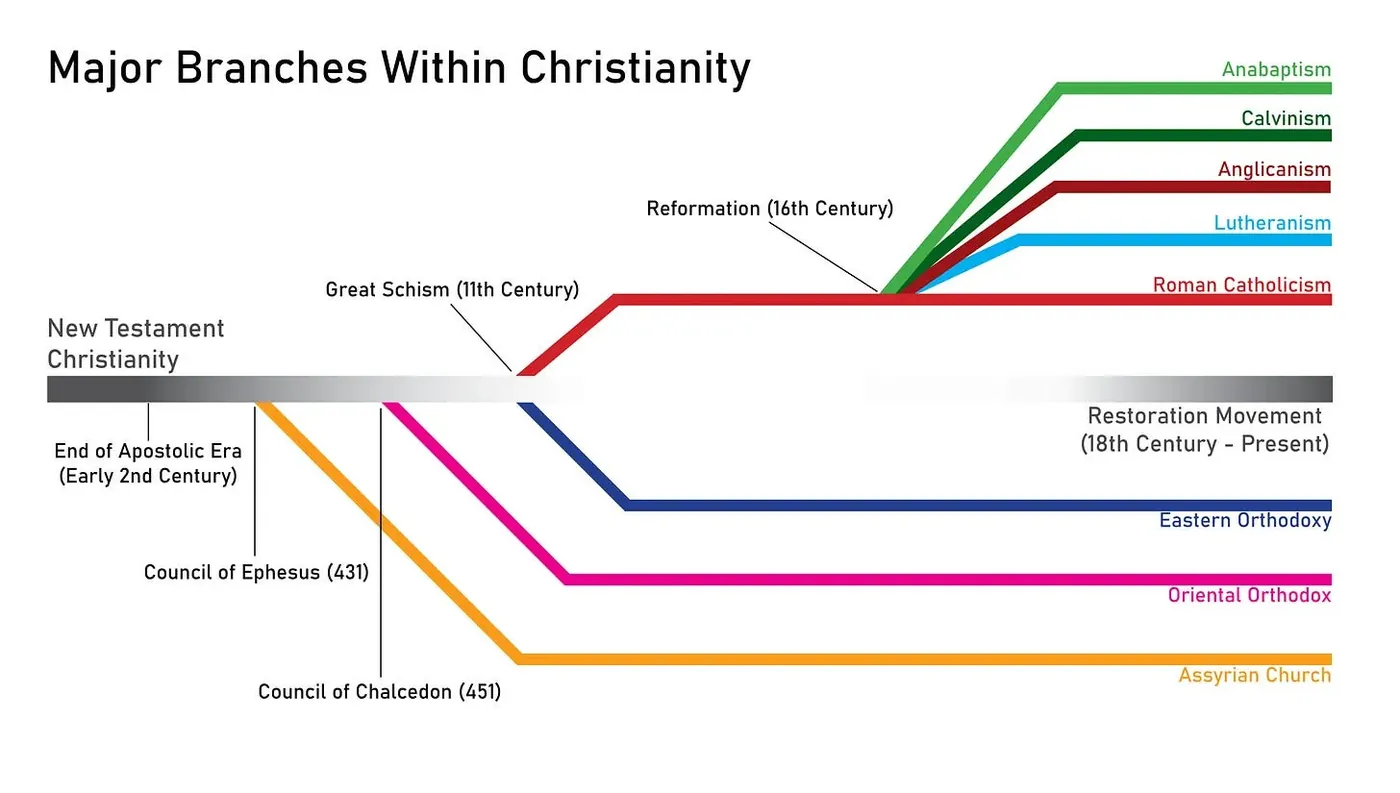
Then Martin Luther knocked the whole structure down in the 16th century with the Protestant doctrine of vocation. He wrote that a milkmaid at work pleased God as much as a monk at prayer. He believed that what made work holy wasn’t the type of work, but the faith of the person doing it.
Luther’s claim was actually quite radical. He extended the idea of a divine calling to include ordinary labour. He was a monk himself, who was dismantling the special status of his own work.
Then John Calvin took the theology further. He taught predestination, meaning that God had already decided whether you’d be granted salvation, before you were born. Nothing you did in your earthly life could change that fate, nor could you know which you were destined for. Living with that kind of uncertainty is close to unbearable, so believers looked to success in their vocations for signs that they might be amongst those elected for salvation.
Luther and Calvin were indifferent to whether a farmer enjoyed farming. A person who felt unfulfilled by their work would have been told to get on with it. Duty was the point and feeling had nothing to do with it. This is what we now call the Protestant work ethic.
Max Weber traced how that theology mutated into a secular ethic of labour. His account of exactly how we got here has been argued over for more than a century. What’s harder to dispute is that the theology fell away but the ethic didn’t. We stopped believing that our career says anything about our standing with God, but we’ve carried on working as though it does.
I can’t help but notice how closely those three orders (work, fight and pray) map onto the three work orientations (job, career and calling). Those who prayed had a calling. Those who fought had status, hierarchy and advancement, which is basically a career. Everyone else had a job. The apple doesn’t fall far from the tree.
In the Middle Ages, you didn’t choose which order you belonged to. You were born into it. These days, we have more choice and there’s more room to change our economic and social status. It’s entirely possible to start from modest beginnings and end up at the top of a field. Plenty of people have. I also want to be sensitive here too. Following a calling tends to require a financial cushion, which is why artistic callings run in families that can absorb lean periods.
The source moved inwards
The idea that work should fulfil you began to emerge during the Romantic period with philosophers like Jean-Jacques Rousseau and Johann Gottfried Herder. Rousseau argued that morality comes from listening to an inner voice rather than from an institution. Herder said that each person has an original way of being human and living by someone else’s standards is missing the point of your life.
Before the Romantic period, the source of morality came from God and from the people around you. After it, morality came from an inner voice. As Christianity’s hold weakened, the West didn’t stop worshipping. Instead, it relocated what it worshipped, and what it landed on was the individual person.
We started believing that an authentic self is buried somewhere inside us and all the answers lie there, if you go deep enough. You can see it in Maslow’s hierarchy of needs, with self-actualisation at the top of that pyramid and in the way humanistic psychology has taken hold. Therapy, coaching, personal development and wellbeing culture, all sit inside the frame I’ve just described.
The authentic self is a strange thing to build a life on. It’s a self-centred philosophy and I can’t unsee how much of Western psychology rests on the assumption that if you go deep enough into yourself you’ll find something waiting. I want to be careful here, because there’s an ugly version of this critique that dismisses inner work as navel-gazing. That isn’t what I mean. Looking inward has changed my life, but what I’ve started to notice is that it only takes you so far.
If we believe that an authentic self is buried inside us, then it needs somewhere to surface. Work is often the place where the evidence of it accumulates. We examine our professional life for signs we’ve become who we were meant to be.
Affiliation is falling, but belief hasn’t
Religion, spiritual traditions and philosophy have always been the places we looked to for answers to the complex questions in life, like what is my life for and why does it matter?
There are four things that religion provides, according to Tara Isabella Burton:
Meaning: what life is for and why it matters
Purpose: what your role is in all of it
Community: people to share it with
Ritual: practices that make the belief real
For most of history, these four arrived bundled through a single religious institution, but that’s starting to change as religious affiliation is falling.
The “nones,” meaning those who don’t identify with any religion, are now the third largest group in the world after Christians and Muslims. What people are retreating from are the institutions themselves, which have been tainted by immoral behaviour and sometimes seen as encouraging intolerance or even harm. Interestingly, a large portion of people who tick “no religion” on a census form, still say they believe in God, or a soul, or something beyond the natural world.
This checks out for me. I grew up Catholic. I’ve been through all the formal ceremonies of a good Christian, except marriage. I went to a Catholic primary and high school, sang in the choir and volunteered myself for liturgical readings. On the odd occasion, I’d even find a younger version of myself praying to God.
As a teenager, I started to distance myself from it. It was uncool, and there were, and are, so many stories of perverted abuse. I couldn’t really see the point of believing in a God that allows awful things to happen, or a God that I couldn’t prove existed. If I filled out a census form today, I’d tick “no religion,” and yet I’d also describe myself as a spiritual person. “No. religion” was a position I took a long time ago, but the more I learn about meaning, the less sure I am about maintaining this position.
When we walk away from religion, we leave these four things unaccounted for. Look at what happens when you run these four against work: meaning is the company’s vision and mission, purpose is your role, community is your colleagues and ritual is the daily standup.
Work does this well, which is part of why we ask so much of it. Half of your waking hours are dedicated to work, so wanting those hours to mean something isn’t a silly thing to want.
The problem is workaholism. For a lot of people, work is the only thing supplying meaning, purpose, community and ritual, and it’s also the one institution that can discard you with a redundancy. Most of us aren’t oriented toward work in a way that would make it a good source of meaning anyway, because we’re motivated by extrinsic rewards, like money, power and prestige.
Back in the 13th century, Saint Thomas Aquinas named four things people worship in place of God: money, power, pleasure and honour. His point wasn’t that any of them are inherently bad, but the trouble begins when you worship them.
Work is usually the place you chase those things. For most people, money comes from work, and power tends to arrive through the same door, since work is the means for changing your economic and social status. Honour too, if you count your title and being well regarded by people in your field.
It’s also what David Foster Wallace meant when he said, everybody worships. His point was that worship isn’t optional and the only choice is what you worship.
Pleasure, leisure and rest
So what about pleasure? We tend to pursue pleasure in the hours left over from work.
The philosopher Josef Pieper argued that we’ve come to use the word leisure to mean rest, and we define it entirely by its relationship to work. We rest so we can work. We take holidays to recover from work. We protect our evenings from work. It’s as though work is the fixed point and everything else arranges itself around it.
He meant something quite different by leisure. Leisure is actually contemplation, philosophy, learning, practising your faith, deepening your relationships and artistic experience. All activities you choose to do for yourself without an economic reward.
By that definition, few people I know have any leisure at all.
Most of our leisure has become passive. The things that make an experience meaningful, like challenge, absorption, using a skill at the edge of your ability, are absent from an evening of scrolling social media, or watching another series. We’ve stopped taking our leisure seriously, and in doing so, we ask work to give us meaning that it can’t offer us alone.
The sociologist Robert Stebbins draws a distinction between casual leisure, which is immediately rewarding, short-lived, requires no training, and serious leisure, which is the systematic pursuit of an amateur, hobbyist or volunteer activity that is substantial enough to constitute a career of its own.
Casual leisure produces pleasure and a lift in mood. Serious leisure produces meaning, growth and fulfilment, because it demands perseverance. Meaning comes from sustained and committed effort, whether that effort is paid or not. Just as work can be a legitimate source of meaning, so can our leisure.
Over the past year, I’ve started taking my leisure more seriously. I deleted every form of social media from my phone. I rarely watch series because I don’t want that to consume my evenings. If I watch something it'll be a film, and I try to avoid American cinema, because their narratives rarely challenge anyone.
With the time that has opened up, I’ve been playing chess, reading books that grapple with complex ideas, I follow weird intellectual curiosities like the relationship between work and religion, I push my body through effortful physical activity and I’m part of a small writing and book club where we discuss philosophical ideas that arise from the books we’ve read or pieces we’ve written. Once a week, I go to a buddhist monastery to meditate.
This is what leisure was always meant to be. It wasn’t meant to be reduced to passive rest and doomscrolling.
Transcending yourself
We currently live inside the inheritance of the Romantics, mostly without having chosen it, and it seems worth asking whether it’s any more correct than what the Old Testament, Luther or Calvin taught.
There’s one element that I haven’t mentioned yet.
Transcendence is the experience of being in contact with something larger than yourself. It’s found in moments of awe, which we call the numinous. It has arrived for me in contact with nature, through meditation, in pieces of literature that cause a sharp pang in my chest, in creative flow and in tender moments of connection with another person. It becomes even more real when I think about how each of us are a speck of dust, flying around the sun in an inconceivably vast universe. The irony of how insignificant our lives are, and how much it all matters so dearly to each of us.

The strange thing about transcendence is that it works by making you feel smaller. It contributes to our sense of significance, the third part of meaning. One form of transcendence is to seek the metaphysical, through spiritual, philosophical or creative pursuits. The other is to look outward, to the people around you and by contributing to something beyond yourself.
The entire apparatus of a career works in the opposite direction. It exists to make you bigger through your title, progression and your identity. You’re forever doing more and being more.
I’ve wondered whether the search for a calling was ever about work at all. Is it actually a search for deeper meaning that happens to show up in the place we spend most of our waking hours? Does it have more to do with nourishing a spiritual life, than with finding the next job?
I’ve experienced enough to know that meaning doesn’t sit on the other side of money, power, pleasure or honour. To give yourself to a calling that serves something beyond your own advancement, that helps other people and leaves things better than you found them, is a rare and precious thing.
Building towards a calling might just require the courage to stop settling for work that drains your spirit.
I recently finished Man’s Search for Meaning and I’m currently reading The Meaning of Your Life. I’d love to hear book recommendations on the topic of meaning in the comments below. What changed in how you approach life after reading it?
About Work Worth Doing
Work Worth Doing is a space for people who’ve outgrown a professional career they’ve spent years building, and aren’t sure about what comes next. You’ll find essays on identity, purpose and finding fulfilment outside of work too.
I work 1:1 with people transitioning from a professional career into meaningful work. To learn more about how coaching can support you, book a consultation or learn more below.
First published in Work Worth Doing, my newsletter on the identity shifts, permission barriers and confidence blocks that stand between you and the work you want to do.